
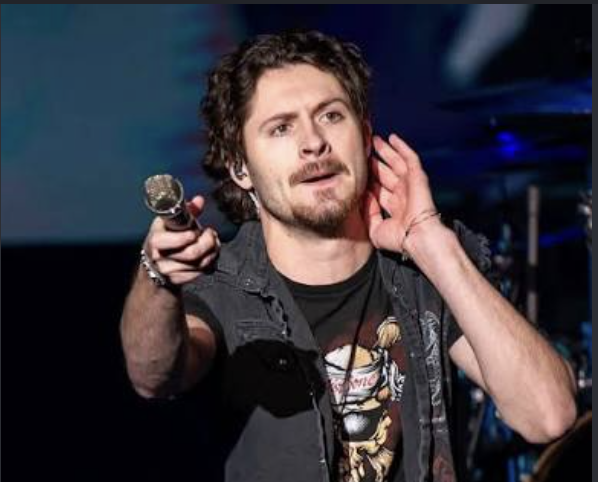
The Firehouse vocalist talks about stepping into a legendary band, the music that inspires him, and the moments that still make him stop and think, “Is this really happening?”
For Nate Peck, joining Firehouse has been a combination of opportunity, hard work, and moments that still feel a little surreal.
Before he started filling in for CJ Snare, Peck knew the members of Firehouse primarily through their music. He spent time researching Bill Leverty, Michael Foster, and the rest of the band before stepping onto the stage with them for the first time.
Meeting the musicians behind the songs was one thing. Finding himself performing alongside them was another.
“I would go online and kind of research Bill and Michael and all the guys,” Peck said. “And that's for me, it was going out there to that first show and meeting them and just figuring out who they were.”
What stood out to him was how welcoming the band was.
“They're so down to earth,” he said, describing the opportunity to work with them as a real honor and treat.
Stepping Into the Firehouse Legacy
Taking over vocal duties in a band with such a long history comes with plenty of pressure, but Peck has approached the experience by focusing on the music and the people around him.
There have already been plenty of moments where he has had to step back and appreciate what is happening around him. When asked whether he gets the chance to recognize those pinch me moments while everything is happening, Peck admitted that it happens all the time.
“You almost kind of third person and kind of look at yourself sitting with a group of individuals and go, Wow, is this really happening right now?” he said.
For Peck, part of that feeling comes from meeting bands and musicians he grew up looking up to.
Being surrounded by artists who influenced him makes the experience feel even more significant.
Learning the Show and Connecting With the Crowd
Peck's role with Firehouse is not simply about singing the songs. He has also had to learn how to read the room and connect with an audience while performing some of the band's biggest material.
When asked how he can tell whether the audience is enjoying a particular song, Peck has a simple answer.
“If you see somebody smiling or they're kind of groove into the music, that's a good indicator for me personally,” he explained.
That connection becomes especially important during the band's shorter sets.
At Disney, Firehouse performed three sets a night, something Peck had never done before. He described the experience as unique and demanding, but also a lot of fun. The layout of the venue allowed different groups of people to experience the band during each performance, with some audience members even returning for another set. Pasted text(20261001-023415)
The band also had to rethink how they presented some of Firehouse's biggest ballads.
Instead of performing the songs in their entirety during a shorter set, Peck, Leverty, Michael Foster, and Alan McKenzie worked together to create a medley featuring some of the band's biggest ballads.
They carefully figured out where one song should transition into the next, making sure they hit the right hooks and moments while keeping the performance flowing.
The arrangement came together through rehearsal and collaboration, and after seeing the audience reaction during the first show, they decided to keep it in the set.
A Voice That Goes Beyond One Genre
One of the things that stands out about Peck is the range of music he listens to.
During the conversation, the group discussed a video of Peck performing Simply Red's “Holding Back the Years.” The performance caught the attention of the Press Play team, who praised his ability to take on a song made famous by such a distinctive vocalist.
Peck's appreciation for older music is something the group immediately recognized.
He also talked about Great White, naming the intro to “All Over Now” as one of his favorite riffs. He described the song's blues influenced rock intro as something that has always stood out to him.
His musical interests are not limited to classic rock, either.
When asked what music he listens to when he wants to feel good, Peck immediately brought up Bruno Mars and his latest album. He specifically mentioned “Why You Wanna Fight” as a song he enjoys and has also performed himself.
Later in the conversation, he brought up Earth, Wind and Fire's “After the Love Has Gone” as another song he had recently rediscovered.
Those choices reveal another side of Peck as a vocalist. While he is performing classic rock with Firehouse, his musical interests extend across rock, pop, soul, and R&B.
The Importance of CJ Snare
Perhaps the most meaningful part of Peck's journey with Firehouse is his connection with the band's former vocalist, CJ Snare.
Bill Leverty described Peck as CJ's protégé and explained that the two had developed a close friendship before Snare's passing. According to Leverty, CJ and Peck would speak once or twice a week and had formed a strong bond.
For the members of Firehouse, that connection gives Peck's role with the band an added significance.
It is a responsibility Peck appears to approach with respect.
He is not trying to erase what came before him. Instead, he is stepping into a role within a band that already has decades of history while bringing his own voice and personality to the stage.
Finding His Own Way on Stage
Peck has also developed his own approach to performing live.
When the conversation turned to in ear monitors, he explained that he performs with one ear in and one ear out. That allows him to hear what is happening onstage while still getting some of the natural sound and energy from the audience.
That connection with the crowd is clearly important to him.
Even something as simple as seeing someone smile or move along with the music can tell Peck that the performance is connecting.
At the same time, he admits that certain things can throw him off. One example is the person in the crowd who is sitting directly in the center wearing sunglasses and an eighties wig while looking completely unimpressed.
It is a funny moment from the conversation, but it also says something about the reality of performing live. Even with years of experience, musicians are still paying attention to the people standing directly in front of them.
A Different Kind of Song Story
When asked what song he would dedicate to the world today, Peck chose Marvin Gaye's “What's Going On.”
It was a fitting choice for an artist who spends so much time moving between different generations of music.
Throughout the conversation, Peck repeatedly returned to songs that have lasted beyond their original moment. Simply Red, Great White, Earth, Wind and Fire, Bruno Mars, and Marvin Gaye all became part of a conversation about what makes a song memorable.
For Peck, music does not seem to exist in separate categories.
A great vocal performance is a great vocal performance. A great riff is a great riff. A great song can come from any decade or genre.
Looking Ahead
Peck's time with Firehouse is still relatively new, but he has already experienced the kind of moments that can define a musician's career.
He has stepped onto stages with a legendary band, performed songs that have been part of people's lives for decades, worked alongside musicians he once only knew through recordings, and continued developing his own identity as a vocalist.
And despite everything that has happened so far, Peck still approaches the experience with a sense of appreciation.
At the end of the conversation, his closing message was simple.
“Just thank you guys for taking the time to have us on and we hope to do it many more times.”
For Nate Peck, the journey with Firehouse is still unfolding. Each show brings another audience, another stage, and another opportunity to step into a piece of rock history while continuing to make the role his own.